POC is a common abbreviation used online and in text conversations, but its meaning can change depending on the context. On social media platforms like TikTok, Instagram, Snapchat, and X, POC most often stands for “Person of Color.” People usually use the term in discussions about culture, identity, diversity, representation, and social issues.
You may also see POC used in workplaces, emails, or business conversations where it means “Point of Contact.” Because the abbreviation has multiple meanings, many people feel confused when they first see it in messages, captions, or comments online.
The easiest way to understand POC is by looking at the topic of the conversation. In most social media discussions, it refers to “Person of Color,” while in professional settings it usually means “Point of Contact.” As internet slang continues to evolve, learning terms like POC can help you better understand online conversations and avoid misunderstandings.
POC Meaning in Text
POC is an acronym that most commonly means “Person of Color.”
It is used to describe individuals who are not considered white, especially in discussions about race, culture, equality, representation, or identity.
Unlike many internet slang terms, POC is not just casual texting slang. It is also a commonly used social and social-awareness term in media, workplaces, schools, and online communities.
Simple Definition
POC = Person of Color
People use it to talk about communities, experiences, representation, or cultural identity in a shorter and quicker way online.
Is It Slang, Acronym, or Abbreviation?
POC is mainly an acronym because it uses the first letters of each word:
- P = Person
- O = Of
- C = Color
It is not typical “funny slang” like LOL or BRB, but it has become common internet shorthand in digital conversations.
What It Means in Everyday Chat
In normal texting, someone may say:
- “The movie has more POC representation.”
- “She’s a POC creator on TikTok.”
- “People want better opportunities for POC communities.”
The meaning usually depends on the context of the discussion.
Where People Use POC
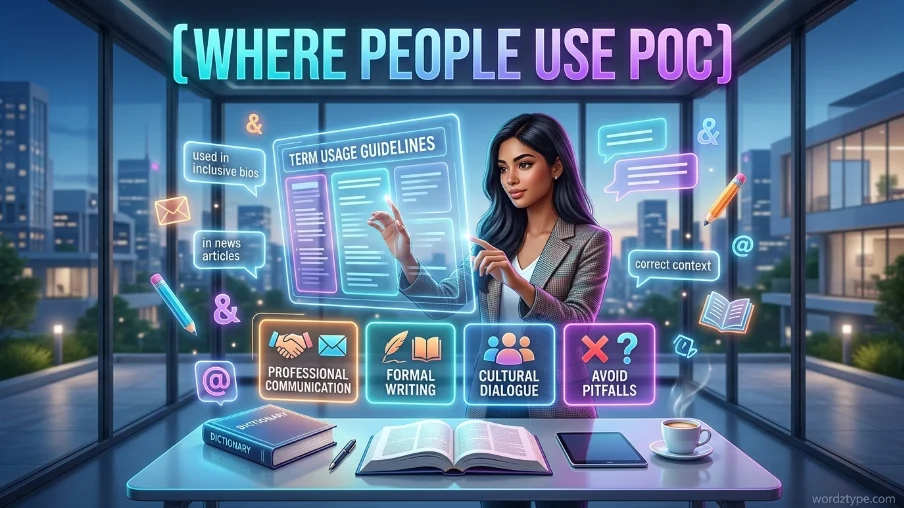
The term appears across many social platforms and messaging apps. Its meaning usually stays the same everywhere.
TikTok
On TikTok, POC is often used in videos about:
- culture
- beauty
- identity
- representation
- social discussions
Example:
“Support more POC creators this year.”
Hashtags using the term are also common.
Snapchat
On Snapchat, people may use POC casually in private chats or story captions.
Example:
“That creator is a POC influencer I follow.”
Instagram users often use the term in:
- captions
- activism posts
- fashion content
- beauty discussions
- creator bios
Example:
“Highlighting amazing POC-owned businesses.”
In WhatsApp group chats, the term may appear during conversations about movies, trends, social issues, or community topics.
Example:
“The show finally added more POC characters.”
SMS and Text Messages
POC also appears in regular texting because it is shorter than typing “Person of Color” every time.
Example:
“She’s a POC author with great books.”
Real Chat Examples
Here are realistic texting-style conversations showing how people use the term naturally.
Example 1
A: Did you watch the new series?
B: Yeah, I liked the cast.
A: Same, it had good POC representation.
Example 2
A: Who’s your favorite TikTok creator?
B: Probably that POC fashion influencer.
A: Oh yeah, their content is great.
Example 3
A: Why is everyone using “POC” online?
B: It means Person of Color.
A: Got it, thanks.
Example 4
A: The brand got criticized online.
B: Why?
A: People said they ignored POC customers.
Example 5
A: I’m looking for diverse book recommendations.
B: Try reading books from POC authors.
A: Good idea.
Example 6
A: That movie felt more realistic.
B: Yeah, the cast was more diverse.
A: Definitely better POC representation.
Example 7
A: What does POC mean on TikTok?
B: Usually Person of Color.
A: I kept seeing it in comments.
Example 8
A: Have you heard about that skincare brand?
B: The one made for POC skin tones?
A: Yep, that one.
Example 9
A: The conference invited more POC speakers this year.
B: That’s actually good to see.
A: Agreed.
Example 10
A: Is POC considered offensive?
B: Usually no, if used respectfully.
A: Makes sense.
How to Reply When Someone Says “POC”
Your reply depends on the conversation and tone.
Funny Replies
- “Internet acronyms keep multiplying.”
- “I learn new online terms every week.”
- “TikTok has its own dictionary at this point.”
Casual Replies
- “Oh okay, now I understand.”
- “Thanks for explaining.”
- “I’ve seen that term online before.”
Friendly Replies
- “That’s actually helpful to know.”
- “Appreciate the explanation.”
- “Good to learn new internet terms.”
Neutral Replies
- “Understood.”
- “Got it.”
- “Thanks for the clarification.”
Is POC Rude or Offensive?
POC is generally not considered rude when used respectfully.
It is widely used in media, education, workplaces, and online discussions as an inclusive term.
However, context matters.
When It’s Usually Safe to Use
It is commonly acceptable in conversations about:
- diversity
- representation
- culture
- media
- education
- identity
When You Should Be Careful
Avoid using it:
- in a mocking tone
- as an insult
- in offensive jokes
- in arguments meant to attack someone
Like many identity-related terms, respectful wording is important.
Is It Appropriate at School or Work?
In many schools and workplaces, the term is considered acceptable in respectful conversations.
Still, formal settings may sometimes prefer more specific wording depending on the situation.
Who Uses This Term?
POC is used by many different age groups online, but it appears most often among younger internet users.
Gen Z Usage
Gen Z frequently uses the term on:
- TikTok
- X (Twitter)
- YouTube comments
- online forums
It commonly appears in discussions about culture, trends, and media.
Millennials and Adults
Many adults also use the term in:
- workplace discussions
- articles
- education
- news content
- podcasts
How Common Is It Online?
The term is very common online today. You’ll often see it in:
- hashtags
- creator discussions
- social commentary
- entertainment reviews
- diversity conversations
Origin of the Term
The phrase “Person of Color” existed long before modern social media.
Over time, the acronym POC became popular online because internet users prefer shorter terms in texting and digital communication.
Internet Culture Influence
Social media helped spread the acronym quickly through:
- hashtags
- activism
- online discussions
- creator communities
- trending conversations
Today, many people recognize the short version instantly.
Is the Origin Clear?
Yes, the meaning is fairly clear and widely accepted online. However, different communities may use the term differently depending on the context.
Comparison Table
| Term | Meaning | Type | Usage | Popularity |
|---|---|---|---|---|
| POC | Person of Color | Acronym | Identity and diversity discussions | High |
| IDK | I Don’t Know | Slang Acronym | Casual texting | Very High |
| IDC | I Don’t Care | Slang Acronym | Informal chats | High |
| IMO | In My Opinion | Acronym | Opinions online | High |
| BRB | Be Right Back | Chat Slang | Quick messaging | Very High |
Real-World Usage Example
Imagine a group of friends discussing a new Netflix show after school.
One friend says:
“I liked how the show included more POC characters.”
In this situation, they are talking about representation and diversity in entertainment. The term is being used casually and respectfully during normal conversation.
You might also hear the term during workplace discussions about hiring diversity, in social media captions, or while talking about creators and influencers online.
Frequently Asked Questions
What does POC mean in text messages?
In text messages, POC usually means “Person of Color.”
What does POC mean on TikTok?
On TikTok, it often refers to creators, communities, or discussions involving people of color.
Is POC slang?
POC is more of an acronym than casual slang, though it is widely used online.
Is POC rude or offensive?
Generally, no. It is usually acceptable when used respectfully and appropriately.
How should you reply to POC?
You can reply casually with things like:
- “Got it.”
- “Thanks for explaining.”
- “I understand now.”
Conclusion
POC most commonly stands for “Person of Color.” People use it online, in texting, and on social media platforms like TikTok, Instagram, Snapchat, and WhatsApp.
The term is widely used in conversations about culture, identity, diversity, and representation. In most situations, it is considered respectful and safe when used appropriately.
If you see POC in a chat or social media post, the meaning is usually straightforward once you understand the context. Like any online term, it’s best to use it respectfully and avoid using it in a negative or mocking way.
Discover More Post
What Does EOM Mean in Text? Real Meaning Examples …
What Does Bae Meaning in Text? Real Meaning Examples & Social …
What Does Gang Gang Mean in text? Real Meaning …

Lyric is a seasoned English language educator, writer, and SEO content expert with over 8 years of experience. Specializing in literary devices, metaphors, similes, and figurative language, Lyric helps readers and writers enhance their skills with practical, easy-to-understand insights. With a passion for creative writing and content strategy, Lyric has crafted hundreds of articles that are both engaging and optimized for search engines. On WordzType, Lyric shares valuable resources to inspire learners, writers, and content creators worldwide.

